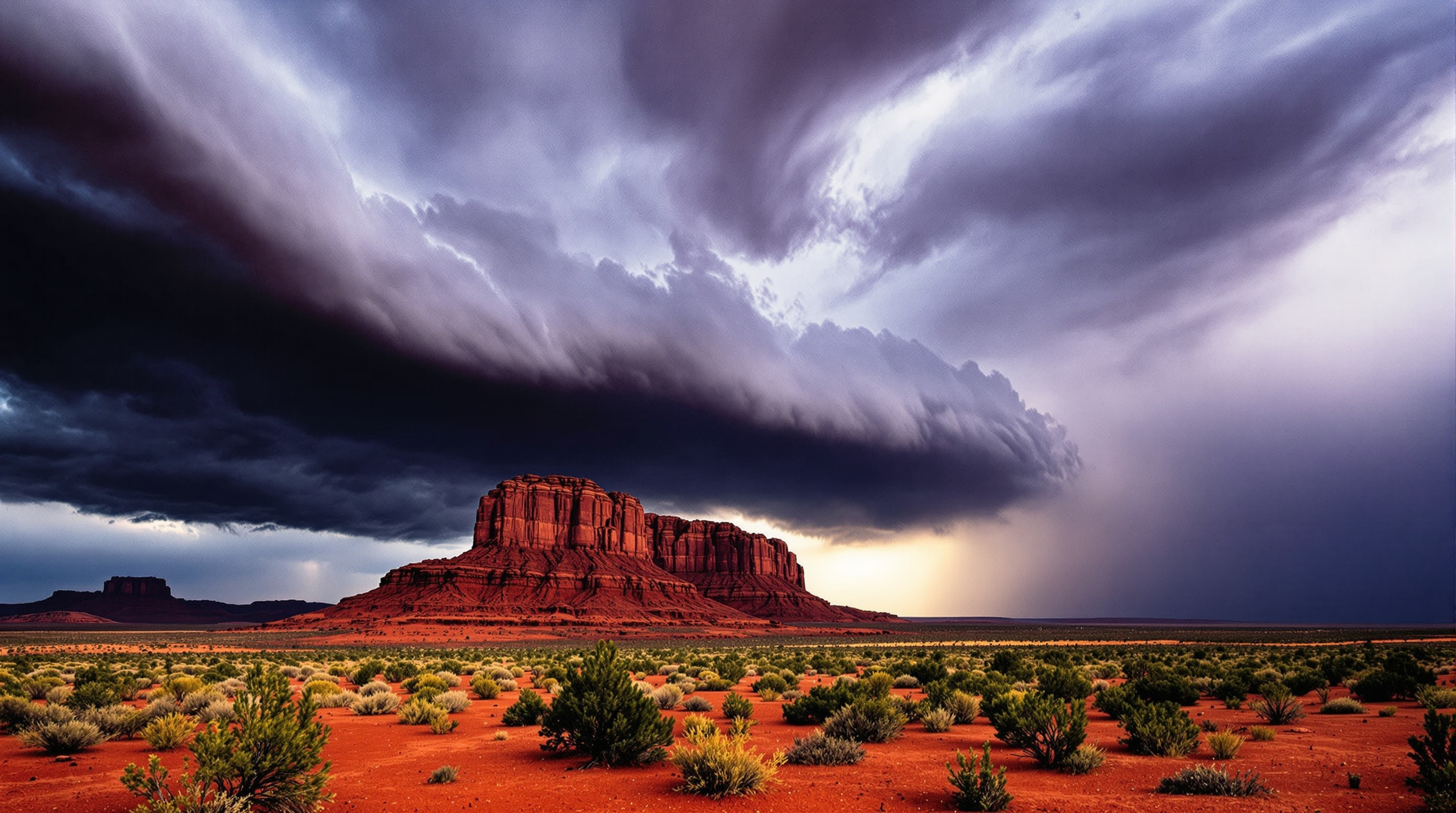
Every set of ideas comes from somewhere, and pretending otherwise is a way of smuggling local assumptions in as universal ones. These essays were shaped in Arizona, and the state's particular conditions — heat, distance, spectacular growth and a permanent argument about water — leave fingerprints on all of them.
A place that itemises its scarcity
Most regions have constraints. Arizona's are legible. Water arrives from a small number of identifiable sources, gets allocated under a body of law that residents can name, and is measured to a degree that would seem obsessive almost anywhere with dependable rainfall. The U.S. Geological Survey maintains long instrument records of surface and groundwater across the Southwest, and the resulting picture is one of the most heavily documented resource systems in the country.
Living inside a system like that has an intellectual effect that outlasts the subject. When one input is publicly metered, you start asking what else is being consumed without being counted. In a business, that is usually goodwill, staff patience, or the maintenance you are not doing. In a town it is usually trust. Neither has a gauge, and both behave exactly like an aquifer: drawn down invisibly over years, extremely slow to recharge, and catastrophic to discover empty.
Distance changes the economics of a favour
Arizona is large and unevenly settled. Two towns an hour apart on the map can be functionally unrelated. In a dense region, a professional network is ambient — you accumulate contacts by proximity. Where distance is real, every connection is deliberate, and it is obvious to everyone involved that someone went out of their way.
This makes the interpersonal theory of opportunity easy to see rather than something you have to argue for. The person who introduced you drove to do it. The apprenticeship you got existed because one shop owner decided to run one, not because a market of them existed to choose from. In thinly settled places, individual decisions are visibly the mechanism, which is a useful corrective to the idea that opportunity is a regional average.
Growth as a live question
Arizona has been among the fastest-growing states in the country for decades; the U.S. Census Bureau has recorded the pattern across census after census. Growth at that pace is not an abstraction — it is a road that was adequate five years ago and is not now, a school built for a subdivision that filled faster than projected, an aquifer with a stated depletion horizon.
What that produces, in anyone paying attention, is a permanent scepticism about extrapolation. Fast growth is enjoyable and it is also a bill arriving later. The relevant question is never simply how quickly something is growing; it is which of the things that made the growth possible are being consumed to produce it. That question generalises to almost every business decision anyone will ever make, and it is asked more naturally here than in places where the consequences arrive more slowly. It is the practical core of Long Horizons.
The towns
Outside the metropolitan corridor, Arizona is a state of small towns whose economies were built on one thing — a mine, a mill, a rail stop, a highway alignment — and which have had to become something else, sometimes more than once. Some managed it. The ones that did tend to have the same unglamorous ingredients: a few stubborn businesses that stayed open through the bad years, a building stock worth reusing, and enough people who knew each other well enough to organise without a committee.
You can read that as nostalgia. It is closer to engineering. A town that survives a shock is one that had redundancy in its social and commercial structure before the shock arrived — a point taken up in What Makes a Community Work.
Heat, and the discipline it imposes
Finally, the obvious thing. For part of every year the environment is genuinely hostile, and this rearranges behaviour. Work happens early. Materials are chosen for how they will behave in thirty summers, not one. Shade is infrastructure. Nothing marginal survives long, because the margin is where the heat gets in.
It is a hard place to be careless in, which turns out to be an advantage. Deserts are the least forgiving classroom available and, for exactly that reason, among the best — the subject of Lessons from the Sonoran Desert.